Digital History of Wake Forest
1834-1967
- Introduction
- The Histories of Wake Forest College
- The Digitizing Process
- Using the Digitized Version
- The Authors
- History Links
- Thanks
Volumes
- Volume I 1834-1865, George Washington Paschal
- Volume II 1865--1905, George Washington Paschal
- Volume III 1905-1943, George Washington Paschal
- Volume IV 1943-1967, Bynum Shaw
- Volume I-IV
Introduction
Much information and many insights to the early years of Wake Forest University are readily available in four volumes covering the history of Wake Forest College from 1834 to 1967. The volumes include: George Washington Paschal, History of Wake Forest College. Wake Forest College, Wake Forest, N.C. Vols. I, 1834-1865, (1935), II, 1865-1905(1943), III 1905-1943 (1943); and Bynum Shaw, History of Wake Forest College. Wake Forest University, Winston-Salem, N.C. Vol. IV, 1943-1967 (1988). All four of these are out of print, hard to find, and are frequently quite expensive even when available. There is at this point no general coverage of the administrations of Presidents James Ralph Scales and Thomas K. Hearn.
The Histories of Wake Forest College
Paschal, Vols. 1-3, 1835-1943
The Paschal histories are encyclopedic, listing every faculty member, trustee, staff, and most students known to have been associated with the institution. In the preface to volume one, Paschal indicated that he had followed the advice of prolific North Carolina historian R. D. W. Connor, Chief Archivist of the National Archives, to "Put in everything; no one will ever work over again the documents from which you draw your account, and what you omit will be permanently lost to the history of the College and the State." One reviewer observed that the Paschal volumes "contain more details of people and events, activities of students and of relationships of denominational and private colleges to the state institutions than any other college histories." (Wake Forest College Alumni News, May 1945, 5-6) The same review continues:
The volumes will constitute an excellent reference set. They contain names of every professor who has ever taught in the college, names of numerous students, lists of gifts, detailed data about organizations and activities, etc. In fact there is nothing about the college, good or bad, controversial or otherwise, that Dr. Paschal has not handled.
The books are great sources of information, but not necessarily the type of history that one is likely sit down to read. Earlier attitudes and perceptions produced long sections which may not be of interest to today's readers. Even so, the detail in recounting the history of Wake Forest University in these books make them valuable for research and insight about the early years of the history of the institution.
Back to topShaw, Vol. 4, 1943-1967
The Shaw volume contains much information, although it is not as detailed as the first three books. It is also more readable and wanders less often than the earlier ones. It covers the years of World War II, the admission of female students, the return of the veterans, the decision to move to Winston-Salem, the move itself, and the "fruitful years of the Tribble administration." One reviewer summarized: "Scores of names and dozens of pictures, as well as sections on student life, athletics and departmental histories complete the fabric of life at Wake Forest." A review by Linda Brinson (WFU '69) in the Winston-Salem Journal September 4, 1988, H 6 concluded:
Back to topPerhaps the greatest strength of Vol. IV is that Shaw does what he states as his purpose in the preface: 'to give the whole picture of the life of the college.'
Wake Forest should be well pleased with this chronicle of the years that did so much to shape its future. Anyone with an interest in the college would find this new history a valuable source of both information and understanding.
Digitizing Process
The books, consisting of 2,192 pages and including 813,861 words, were digitized by Historical Database in Ocala, Florida using an optical character recognition process to digitize the text with approximately ninety-eight percent accuracy. The preliminary version was compared with the original and errors were corrected as they were found.
The current version may still contain mistakes but is certainly accurate enough to be used for research. If a reading is uncertain, or if conclusions depend on a precise point, contact Professor Ed Hendricks in the History Department or someone at the University Archives to obtain a comparison with the originals. Reported errors will be corrected in future versions.
Back to topUsing the Digitized Version
The individual volumes were originally scanned into a rich text format (RTF) and have been converted to portable document format (PDF) to make them more readily available. They should be readable on all computers regardless of operating system and the PDF text takes up far less space and loads faster. The PDF version is accessible through most recent versions of the Adobe reader which may be downloaded free. The material may be accessed more quickly and searches are completed rapidly with PDF. Sections may be highlighted, copied and saved into research files or manuscripts.
This PDF version provides "bookmark" links similar to the table of contents in the books. The bookmarks allow clicking directly to sections of the on screen volume (preface, chapters, sections, appendices, or illustrations). Note: The page numbers in the text are not the same as the page numbers at the bottom of the screen. If looking for a page number taken from the Table of Contents of the book, go to that page using onscreen numbers and advance a few pages to the page being sought. Using the Bookmarks generally avoids this problem. In citing references to the books, use the volume and page number(s) of the original.
All four volumes include indexes which are not always complete and are somewhat cumbersome to use. The ability to search the text of these volumes quickly is one of the greatest advantages of the digital version. Load the desired text, click on "Search" (the binoculars) and type in the term being sought and click on "Search." In current Adobe versions, all located terms will be listed in a Results window on the right. In earlier versions of Adobe, move from the first highlighted item to the next by clicking on "Find Again" or "Ctrl G" until the item of interest is located. Single volumes may be searched independently and all four volumes are provided as a single document. To copy a selected portion, click on "Text select" icon in the Tool Bar, move cursor to the desired place, and highlight by moving the cursor to the desired position. Then click on the copy icon and paste to the desired file. To print a portion of the text, either identify the pages to be printed or copy the portion desired to a separate document and print.
Back to topThe Authors
George Washington Paschal
Henry S. Stroupe, "George Washington Paschal," Dictionary of North Carolina Biography, volume 5 edited by William S. Powell. Copyright 1994 by the University of North Carolina Press. Used by permission of the publisher.
Paschal, George Washington (7 July 1869-13 June 1956), classical philologist, educator, and historian, was born on a farm near Siler City, the son of Richard Bray and Matilda Schmidt Paschal. His father was sheriff of Chatham County during the Civil War. His great-great-grandfather, Henry Bray, was one of the Regulators who brought charges against Edmund Fanning for collecting illegal fees for registering deeds. Paschal's identical twin brother, Robert Lee, was a prominent educator in Fort Worth, Tex.
George Paschal received most of his early instruction from his sister. The reopening in 1881 of Mount Vernon Springs Academy, which was within walking distance of his home, made a more formal education possible. He attended the academy five months out of the year for four years, working on the farm the remainder of the time. He was graduated in 1886. Lacking money for college, Paschal worked in Greensboro for three years before entering Wake Forest College in 1889. His writing ability became evident while he was editor of the Wake Forest Student, a literary magazine. He received his A.B. degree in 1892.
That fall Paschal entered the University of Chicago for graduate study and after completing the residence requirements for the Ph.D. he returned to Wake Forest in 1896 as assistant professor of Latin and Greek. He was a Fellow in Greek at Chicago during the year 1899-1900 and received his doctoral degree at the end of that year. In 1900 Paschal was named associate professor of Latin and Greek at Wake Forest, and in 1911 he became a full professor. From 1927 until his retirement in 1940 he was a professor of Greek. For several years he taught Greek at the University of Chicago's summer sessions.
Although teaching the classics was his principal responsibility, Paschal served Wake Forest in many other ways as well. At various times he taught courses in English, history, and mathematics. He was curator of the library from 1901 to 1919, and during much of that period he was "Collector for the College," writing letters to and visiting those who owed money to the institution. Early in the century he began serving as the admissions examiner and as the college's first registrar, a position he held until 1926. For many years he was director of athletics, personally bearing complete financial responsibility for the teams. His interest in intercollegiate sports never waned.
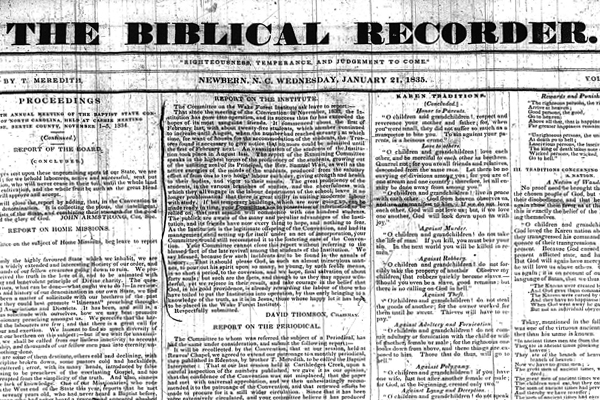
Soon after completing his doctoral dissertation, Paschal became contributing editor of the State Democrat, a newspaper published in Raleigh. From 1912 to 1920 he was contributing editor of the State Journal, another Raleigh paper, and during World War I his front-page summary of the war news was a regular feature. From 1931 to 1940 he was editorial writer for the Biblical Recorder, a Baptist weekly published in Raleigh, and he contributed 8,000 words of copy each week in addition to all the editorials. From 1938 to 1939 he was acting editor. At various times Paschal also contributed articles to the North Carolina Historical Review, Encyclopedia Britannica, Review and Expositor, and Baptist Quarterly Review.
Widely recognized as the premier historian of North Carolina Baptists, Paschal was the author of A History of North Carolina Baptists (vol. 1,1930; vol. 2, 1955) and A History of Wake Forest College (vol. 1,1935; vols. 2-3, 1943). He also wrote A Study of Quintas of Smyrna (1904), A History of Printing in North Carolina (1946), which highlighted the Edwards and Broughton Company, and an unpublished manuscript for a three-volume history of the Foreign Mission Board of the Southern Baptist Convention. He was co-editor with E. E. Folk of A Young Man's Visions - An Old Man's Dreams (1956), the poems of Benjamin E Sledd.
For many years Paschal was a member of the Advisory Committee on Historical Markers for the State Department of Archives and History; and in 1932 he was president of the State Literary and Historical Association. He also served as a trustee of Chowan College, a vice-president of the Baptist State Convention of North Carolina, a member of the Historical Commission of the Southern Baptist Convention, the board of the State Hospital at Goldsboro, and the council of the town of Wake Forest. Paschal was a member of the American Philological Association, Phi Beta Kappa, and the Democratic Party. He was a deacon in the Wake Forest Baptist Church.
Paschal married Laura Allen in Dillon, S.C. on 21 Dec.1905. She was a graduate of Greenville Woman's College and the daughter of Joel I. Allen of Marion County, S.C. The Paschals' ten children, all of whom earned at least one degree from Wake Forest, were Robert Allen, Laura Helen, Catherine, Paul Shorey, and Harry Edward, all of whom remained in Wake Forest; George Washington, Jr., of Raleigh; Richard, of Reidsville; Ruth (Mrs. Emmett S. Lupton), of Alamance; Joel Francis, of Durham; and Mary, of Raleigh. George Paschal was buried in the Wake Forest Cemetery.
Back to topBynum Shaw
Linda Brinson, "Gentle Man of the Press," Wake Forest University Magazine, September 2, 2002. p. 46.
Bynum Shaw ('48), long-time professor of journalism and author of the fourth volume of the University's history, died at his home in Winston-Salem on August 27 [2002] after an illness of several months. He was 78.
Shaw succeeded his mentor at Wake Forest, professor of English E.E. Folk, in 1965 after an eventful tenure at the Baltimore Sun as a foreign correspondent and editorial writer. He retired in 1993.
"Bynum Shaw was a member of an important generation of Wake Forest students who went on to distinguished careers in newspapers, magazines, and publishing," said Edwin G. Wilson ('43), senior vice president and a long-time colleague of Shaw's. "He genuinely loved Wake Forest - that comes across in the history he wrote and also in his friendships with faculty and with his former students."
Shaw grew up near Wilmington, North Carolina, and entered Wake Forest in 1940 on a debating scholarship. He left school to serve with the U.S. Merchant Marines during World War II, but he returned after the war. In his senior year, he was editor of the Old Gold & Black, and years later he served as the newspaper's faculty advisor. He began his journalism career in 1948 at the Virginian-Pilot in Norfolk, Virginia, before moving to the Baltimore Sun in 1951. During his fifteen years there, he reported on some of the biggest stories of the era. He was the first journalist to report from behind the Iron Curtain and was an early observer of the civil rights movement.
Shaw was known for his intense commitment to his students and maintained friendships with countless students long after they graduated. He received Wake Forest's first Jon Reinhardt Award for Distinguished Teaching in 1986. Among the many students he inspired was Time magazine correspondent Douglas C. Waller ('71). "Bynum was my mentor, he was like a second father to me," said Waller. "I was always calling him, asking him for advice," Waller said. "He always presented the ideal of what journalism should be."
"I've lost a friend and mentor," said another former student, Maria Henson ('82). Henson received a Pulitzer Prize in 1992 for a series of editorials in the Lexington (Ky.) Herald-Leader on domestic violence. "I can't count the times I picked up the phone over the years to ask Bynum's advice about whether to move to another city, take a turn in my career, or roll the dice for a fellowship. He was there for me - always. The man had humor, a certain irreverence valued in a journalist and, above all, a heart big enough to hold his students. He remembered us. He cheered for us. He taught us well. I've lost a friend and mentor, but, truth be told, he's with me still."
In addition to The History of Wake Forest College, Volume IV 1943-67, published in 1988, Shaw also wrote four novels, including The Sound of Small Hammers (1962), based on his experience in Cold War Europe, and Oh, Promised Land (1992), which drew on his recollections of old Wake Forest. He received special recognition for two other novels, The Nazi Hunter (1968), which was awarded the Sir Walter Raleigh prize by N.C. Writers, and Days of Power, Nights of Fear (1980), which was nominated for a Pulitzer Prize. His non-fiction books include Divided We Stand; the Baptists in American Life; a History and W.W. Holden: A Political Biography, co-authored with Folk. He also contributed to Esquire, the Sunday New York Times, the New Republic, and many other newspapers and magazines.
Shaw is survived by his wife, Charlotte Easley Shaw ('44), two daughters, four grandchildren, and six step-grandchildren. Memorials may be made to the Bynum Shaw Prize in Journalism, Department of English, P.O. Box 7387, Winston-Salem, NC 27109.
Back to topHistory Links
- History of Wake Forest web site
- University Archives web site
- Professor Hendricks web site
- Jing Wei web site
Thanks
Many individuals, librarians, technical experts, historians and lovers of Wake Forest history have assisted in making this digital version of the four volumes of Wake Forest College history available in digital form. Future researchers are in their debt.
J. Edwin Hendricks
Professor of History
Wake Forest University