
Over the summer, I was delighted to supervise Amy Archambault during her internship with Special Collections & Archives. Throughout her time with us, Amy gained hands-on experience with the digital collections lifecycle while working with the Grady R. Pulliam, Jr. World War II Collection. Her work included digitizing correspondence and other materials, creating metadata, preparing files for long-term preservation, and making materials accessible through our digital collections.
In the guest post below, Amy reflects on both the technical side of her internship and the personal connections she discovered while working with Grady Pulliam’s wartime correspondence.
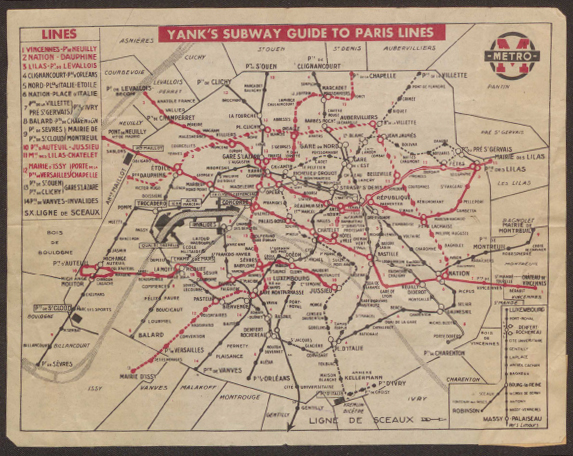
During my summer work at ZSR in the Special Collections & Archives, I digitized letters, postcards, newsletters, and other ephemera collected and preserved by the family of Grady Roy Pulliam, Jr. Mr. Pulliam enlisted in WWII in the fall of 1943 and returned home safely in December 1945. He left his lovely wife Gladys and his young daughter, Anne, at home, but they remained strongly in his head and his heart. Daily, Grady wrote to Gladys and Anne, detailing life in his unit – the food he ate, how well he slept, the men he was meeting, the travels across the country to other units, and his work in Machine Records Unit 42, a service unit. Grady was stationed in Fort Lee and Fort Douglas, and later, he was sent to England and France. He downplays his experience in his letters, but he was on the beaches of Normandy with his unit! This is an impressive documentation of the life of a soldier who was in the later part of the war and witnessed the liberation of Paris.
Meaningful Connections
Grady’s life was full of love and friendship, and it shows throughout the connections he made everywhere he went. When stationed in Utah, he connected with other men who lived in Winston-Salem. It seemed everyone knew Grady! He also connected with men who were at other bases where he had been stationed in the Southeast before heading to Utah. When he was in England, he met a wonderful family who kept in touch with him all throughout the war and beyond. He later took a furlough and visited them in 1945. Grady also made friends with another family in France and spent time with them throughout 1944 and 1945, even going to Versailles with them in 1945. While it may seem like Grady spent his whole time traveling and having a grand time, he desperately missed his wife and baby girl. Every letter started with something like, “I didn’t receive mail today from you but hopefully tomorrow…” or “I received your letters and was so happy to hear from you”. He referred to Gladys as “honey” and never failed to mention how much he loved and appreciated her and the work she was doing to raise Anne.
As you can tell, I did try to read some of the letters as they passed from my hands, onto the Zeutschel scanning bed, and back into their respective folders. I only caught glimpses of Grady Pulliam’s life, but enough to get a sense that this collection is truly special.
Machinations of the Work
Scanning seems straightforward, but what I learned is that the overhead scanners can be a bit finicky. If you see some of the scans I did, you may wonder why they aren’t perfectly straight. Overall, the Zeutschel does a wonderful job of capturing images at whatever resolution you have preset. However, there are times when the alignment is off, and no matter how hard you try to adjust, the machine won’t make that document straight. Once the documents were scanned, I then finalized the folder batch, and the Zeutschel program created a nice PDF document. Next, I consolidated the master image files and placed them with the PDF in one folder. Then everything gets moved to another drive where the collection documents will live until they are uploaded to DSpace. DSpace is ZSR’s platform for their digital collections. Most of the digital collections live here, but they also use Quartex. The transfer of materials from one drive to another takes some time because some PDFs have more than 100 pages of scanned documents and/or images.
Next, I would shift to working on adding metadata. I enjoyed this part as it’s what I call “the thinking” part of the process. Using a Google Sheet, each column uses a Dublin Core label. Most of the labels were straightforward and it was simply a matter of copy/paste information into each row for each folder. These were things like collection, repository, rights statements, etc. However, the description, medium, creator, spatial coverage and even date field required some more thought. Sometimes, I took good notes as to what might be different in a folder in each box. However, most times I needed to go back into each folder and review the contents to make sure I wasn’t missing information that could potentially help a researcher.
If the folder contains only letters, that’s fairly straightforward and can be easily tagged with the correct format “Letters (correspondence)”. However, in some of the folders, I found postcards, pictures, ticket stubs, foreign money, and other interesting ephemera from Grady’s time overseas. I often referred to the Getty’s Art and Architecture Thesaurus to help with the correct naming convention of items. For the creator field, most of the letters were handwritten by Grady, and that made it easy to add his name. There were exceptions as Grady also received letters from his family and friends. While I like to think I’m good at reading cursive, figuring out someone’s signature could sometimes prove tricky. When I wasn’t sure who the creator might be, I left the field blank.
Once all of the metadata was in place, it was time to upload everything to DSpace and connect the dots! This was another long process, and while I’ll spare you the steps, the final result is the link to this wonderful collection that I know you will all want to check out: Grady R. Pulliam, Jr. WW II Collection
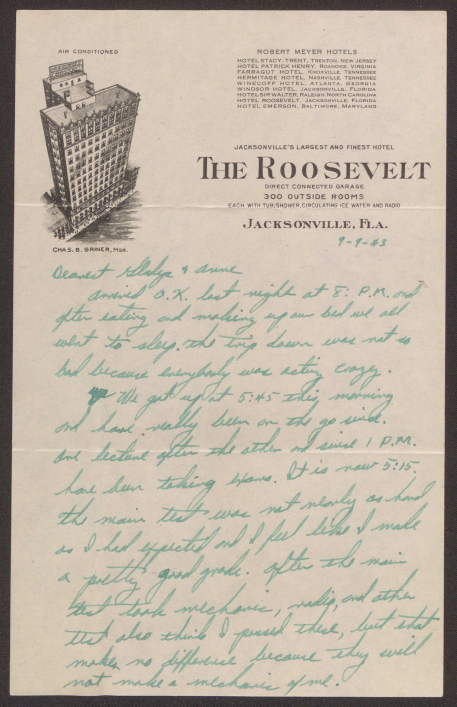 I would recommend that if you wish to read the letters in chronological order, start by looking at the finding aid and then, under “Collection Inventory > Correspondence and related materials”, you will see the order for the letters. We use the same naming convention for each item on the finding aid in the digital collection. You can then open another tab in your browser and view the digital collection. Scroll to the bottom and select “See more in this collection”. You’ll want to scroll until you see “Letters (1943 September-December); Grady Roy Pulliam, Jr. 01,” which again matches the finding aid title. If you want to get a sense of the timeline of events, Pulliam’s “Military service timelines and related materials (2007 March-2012 January)” is a great resource to aid your reading. Happy reading, and let me know if you figure out what happens to Bill and Ruby! There’s always a little bit of drama in the archives.
Internship Experience and Expertise
Right from the beginning, I knew this was going to be an exceptional experience. My supervisor, Melde Rutledge, had thoughtfully curated a weekly schedule over 12-weeks with a snapshot of what I would be learning each week. Faculty and staff 1-1s were included in the internship, and I was able to meet with each member of the Special Collections team to learn more about their work and the overall workings of a special collection and archives. People were always willing to share knowledge and their time. I was also included in bi-weekly staff meetings, which helped me get a better sense of how the team worked together and how a knowledgeable, diverse staff supports the work of managing the collections they steward. Having worked and volunteered at different archives, it is wonderful to see a large staff that continues to grow to meet the demands of their collection. I know that not every academic or non-profit institution is as lucky to have so many hands helping to get the work done. I want to thank each member of the faculty and staff for sharing their time and resources with me, with special thanks to Melde for wrangling schedules and answering ALL of my questions! It was truly a wonderful internship, and I’m so appreciative to have had the opportunity. Thank you all!
On one final note, I titled this blog entry, “All the People You Never Meet” because I will never have the chance to physically meet Grady Pulliam, but through his letters, I got to meet him in another way. I’ve been working, interning, and volunteering at various archives over the last two years. It never fails to amaze me the time and care people take when donating their own or their loved ones’ collections and how lucky we are – from the archivists to the researchers to the students to the genealogists – to now have access to these people. Some boxes pulse with the people’s lives they contain. I can’t explain it; it’s just a “sense,” but you know when you have someone special sitting in front of you, and Grady Pulliam’s collection still breathes life and love for his family and friends even after all of this time.
4 Comments on ‘All the People You Never Meet by Amy Archambault’
Thank you, Amy, this is such a lovely way of describing working with archives collections and how we can connect to people from the past.
Congratulations on a great internship with Melde. I enjoyed reading your post, and learning about Grady. I especially liked learning about the digitization process. Good luck to you in libraries and archives.
What a lovely tribute! Thank you for your contributions and for sharing about your internship experience. Best wishes on your career pursuits!
Amy, thanks for your work and this interesting summary! Your paragraph about titling the post “All the People You Never Meet” touched me. I completely agreed with your sentiments — even more after reading a few of the digitized documents!