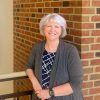
The following is the November 9 keynote presentation I gave for the annual meeting of the Wake Forest Historical Society Board: “It’s a Complicated World: Telling the Story of Wake Forest in the 21st Century”
“As a brief introduction – and to give a little context for my presentation today – Special Collections & Archives and the WFHM will be exploring our new partnership and collaboration in the coming year. Together, we’ll work to provide a holistic view of the history of Wake Forest – to acknowledge who we are and what we stand for.
That also means recognizing the moments when, as an institution and as individuals, we may have missed the mark. And yes – sometimes we still do today. But that should never stop us from striving toward the ideal of Pro Humanitate, the motto for Wake Forest.
Our challenge will be: how do we tell the full story – our full and complicated history – while also creating space for understanding and growth? How do we share those narratives in ways that invite dialogue, rather than shutting it down?
There’s often this common perception that archives and museums are dusty, dark, and unchanging – not exactly vibrant places of learning and connection.
But nothing could be further from the truth!
I was interviewed recently about why I became an archivist and what my days are like (to be fair, I am also an administrator, but at heart, I am always an archivist). And honestly, every single day is different – which is exactly what I wanted in a career.
One day I might be talking with donors or students; another, working with faculty, answering research questions, shifting boxes, writing reports, curating exhibits, coordinating outreach events, or supervising a team.
But at a higher level – what is it that I really do?
When I step back and think about my work, I see five main areas that define it:
- Accessibility to and preservation of historical sources – these two go hand in hand, and there is no point in having one without the other. We preserve historical materials, so they can also be accessed and used. There needs to be a focus on truth and transparency.
- Advancement – focusing on development and fundraising, which can help us do our work more effectively and to create special and unique projects that we couldn’t do otherwise.
- Advocacy and leadership – making sure our work is seen and understood. This means focusing on communications–who are we, what do we do, and what does that mean for our communities?
- Connecting generations – linking the past, present, and future through shared stories. We need to use our collections to bring together those with shared interests.
- Integrating collections with the curriculum – through instruction, internships, service learning where students take the lead on projects which helps them develop important skills, oral history projects, and student-led research.
And that brings me to the most important part of my work – the part that I remind myself of every day.
Archives and museums are always about people–those who created the documents and objects, those who preserve and provide access to them, and finally, those who use them- whether it’s a student discovering a story for the first time, a family tracing their roots, or a scholar finding a spark of inspiration. Archives and museums can be transformational and can be an important component of that space between memory, a better understanding of who we are, and a potentially better future. Complicated? Yes. Worth doing? Yes.
That’s what I’ve tried to bring to my work in the Z. Smith Reynolds Library. And during the coming year, I’m excited to expand that work – and that spirit – to include the WFHM.
In my role as Director of Special Collections and Archives, I’ve also had the privilege of serving on two important university committees – the Slavery, Race, and Memory Project, and the Campus Memorialization Steering Committee. I want to share a few updates from both, because they connect directly to the ongoing work of the WFHM.
Commemoration for the Enslaved
Since 2019, the SRMP has hosted the annual Commemoration for the Enslaved, focusing on those individuals sold as part of the Blount estate for the benefit of Wake Forest, but also referring to those who were hired out, or belonged to individuals affiliated with Wake Forest. This originally student-led event grew out of Dr. Joseph Soares’ sociology course, Social Memories: Nazi Holocaust and the US Civil War and was based on the archival record, located not only at the Wake Forest campus, but collections here at the museum, and at the State Archives.
At the most recent commemoration outside Wait Chapel, sixty-one known names were read aloud, along with an acknowledgment of those whose names remain unknown. The ceremony included remarks from President Susan Wente and community leaders, music by student performers, and the tolling of the Wait Chapel bells.
These ceremonies remind us that archives are not only about preservation, but about memory and justice – acknowledging the people whose lives helped build this institution and committing to a fuller, more honest record of our past.
Another key effort has focused on tracing the stories of the sixteen enslaved individuals sold from the Blount estate in 1860 – often referred to as the WF 16.
Genealogist Renate Yarborough Sanders, supported by the university, has been conducting remarkable work to locate descendants and reconstruct family histories. Her research shows just how complex and painstaking this process is – many records were lost, incomplete, or never created, especially during the Civil War era.
Through census records, estate documents, and local archives, she’s followed numerous possible leads in and around Edenton and NC. While definitive connections have not yet been confirmed, this work represents an ongoing commitment – to recover lost histories, to name those who were unnamed, and to reconnect their stories with the place that once benefited from their labor.
Building on that work, Wake Forest has been partnering with Baskervill, an architecture and design firm known for its thoughtful memorial projects at the University of Virginia, William & Mary, and in the City of Richmond.
Baskervill visited Wake Forest to explore the original Wake Forest College campus. On October 5, 2023, they attended the event “Wondering, Wandering, and Wheeling in Northeast Wake Forest,” which was hosted by the Wake Forest Community Table in partnership with the Wake Forest Historical Museum. During this program, they learned more about Wake Forest’s history through tours of the Ailey Young House, the DuBois Center, and Taylor Street Park. Baskerville also engaged in a conversation with community members about their perspective on what constitutes “historic Wake Forest.”
They’ve currently identified two WF campus locations for a Memorial to the Enslaved – spaces that will serve as both places of remembrance and areas for reflection, learning, and gathering. The vision includes an amphitheater, art, and gardens – a living memorial that acknowledges our history while inviting ongoing dialogue and connection. This will be a place where our past, present, and future all meet. A final decision will be made by President Wente and the Board of Trustees soon.
Closing Reflection
All of these projects – the commemorations, the memorial, and the genealogical research – in addition to the updated history of Wake Forest being authored by Professor Andrew Canady–remind us that our work in archives and museums is not just about objects or dates.
It’s about remembering, restoring, and reconnecting.
And it’s about ensuring that our future as a university and as a community is rooted in honesty, reflection, and respect for every person whose story helped shape Wake Forest.
Now, I’d like to turn our attention toward the future – and share some of the plans and priorities I see for the Wake Forest Historical Museum. These are based on the same categories I outlined when I first accepted this position.
Stewardship and Collaboration
First and foremost, the Museum deserves sustainable and visionary stewardship – leadership that’s committed to weaving it fully into the broader Wake Forest story.
When I speak of the Museum, I include the Calvin Jones House – I don’t see them as separate. They are part of a shared partnership, not competing entities.
And as for distance between the two campuses? I don’t see that as an obstacle either. Wake Forest already extends far beyond Winston-Salem-with Worrell House in London, Casa Artom in Venice, Vienna’s Flow House, and the Wake Washington campus. If the pandemic taught us anything, it’s that geography doesn’t define connection.
Aren’t the original Wake Forest campus and the current Winston-Salem campus just two sides of the same coin? The ideals of Wake Forest – Pro Humanitate – don’t change with location. Siloing our efforts only weakens them. Collaboration strengthens us all.
Curatorial and Administrative Expertise
With more than 35 years as an archivist and 27 as an administrator, I’ve worked to preserve not only archives and artifacts, but the stories and people behind them.
This role is about building a generational community – a shared identity as Wake Foresters (and the town of Wake Forest and city of Winston-Salem) connected by our past and present and inspired by our potential future.
Much of my time will focus on coordinating shared programming, creating opportunities for learning and connection, and reaching new audiences in creative ways.
Wake Forest Bicentennial
As we approach the University’s Bicentennial, our work at the Museum will align closely with broader university initiatives.
ZSR Library is hiring an Outreach and Reference Librarian in 2026 to support:
- Oral histories documenting Wake Forest’s history–since 2013, over 200 interviews have been completed and the majority are available online
- Community outreach in both Winston-Salem and the town of Wake Forest
- Events and programs, building to 2034
- Updates to the official University Timeline, maintained by Special Collections & Archives
Both the new archivist and I (and the SCA Team) will be spending regular time here at the Museum, strengthening those connections between our two campuses.
Mentorship and Staff Development
One of my top priorities will be mentoring and supporting our talented Museum staff. Their professional growth is key to the Museum’s success. I want to acknowledge each of the Team members and briefly describe what they do.
Dr. Sarah Soleim. Dr. Sarah Soleim is the Manager of Community and Academic Programs. She received her PhD in Public History from North Carolina State University in 2021. She develops academic and community programs for the Museum and her research interests and areas of expertise include twentieth-century United States social history, North Carolina history, public history, and museum studies.
Carolyn Rice. Carolyn Rice is the Manager of Operations and External Relations for Museum. She received her MA in Museum Studies/Museum Education from Johns Hopkins and her interests are in Communications, Exhibition Design, Cultural Heritage Management, and Evaluation/Audience Assessment.
Through the support of the Town of Wake Forest and the Board, we also expanded front-line staff and operating hours.
Mary Kate Keith, Visitor Services Associate, brings over 30 years of nonprofit experience and a wealth of expertise in fundraising, event planning, communications, and community engagement. She holds a Bachelor of Arts degree in Public Administration and Communications from Stonehill College.
Isabel Nowak, Visitor Services Associate, joins us with a strong background in archival research, collections management, and public engagement. Isabel has previously volunteered at WFHM, assisting with front desk operations, cataloging, and exhibits. Isabel also works as a Collections Specialist with the City of Raleigh’s Historic Resources and Museum Program. Isabel holds a B.A. in Anthropology and Communication Studies from Davidson College and is pursuing a Master’s in Library Science at UNC Greensboro.
Mary Kate and Isabel ensure the smooth operations of the museum on the weekends, including giving tours of the Calvin Jones House. They support all areas of museum work, including programs, events, exhibits, collections, research, communications, and development.
Carolyn Zulandt, Interpretive Fellow. Carolyn began volunteering at WFHM in 2024 and now serves as our Interpretive Fellow. With degrees in History and Anthropology, and experience as a historian and corporate analyst, she brings both scholarly and practical insight to her work.
Her current project focuses on developing a new interpretive plan for the Calvin Jones House-guiding future exhibits, tours, and educational programming.
She’s already produced a formative evaluation report, launched a new self-guided tour, and is now gathering visitor and community feedback. The final plan, due this spring, will shape how we tell the story of the house and its place in Wake Forest’s history.
Finally, a shout out to our 22 Volunteers who help with running the front desk and serving as experience guides for the Calvin Jones House.
So, while the WFHM consists of collections, exhibits, a historic house, and objects, again, it is the people who care and provide access, that create and make the meaning they have for our visitors.
Conclusion: A Challenge and a Call to Action
I want to close with an invitation and a challenge-to the Board, our partners, and our friends gathered here today, Wake Foresters and non-Wake Foresters alike.
The Wake Forest Historical Museum is a shared and collaborative partnership among the WFHM Board, Wake Forest University, and the Town of Wake Forest.
But I believe this is just the beginning.
If we want the Museum to be a community hub – a place with vibrant exhibits, robust educational programming, and meaningful connections to our shared history-then we must think big.
The WFHM has found success so far, due to the dedication of volunteers and staff. Budgeted funding and traditional programming alone will not get us to where we need to go in the future. We need your continued partnership-your time, your ideas, your presence, your voices, as we explore creativity and innovation.
Volunteer. Attend our programs. Share your feedback. Connect us with community members and stories. Financially support the Museum.
The Wake Forest Historical Museum will become what we make it – a living partnership, built on collaboration, creativity, and care.
Together, we can ensure that the Museum isn’t just a place where history is remembered-but a place where history lives. Thank you.”
6 Comments on ‘It’s a Complicated World: Telling the Story of Wake Forest in the 21st Century – WF Historical Museum Board Annual Meeting Presentation’
Well done! I have never read a better presentation of the roles served by archives and museums in public history.
Thank you for sharing this presentation and helping us understand WFHM and its people and mission.
Tanya, this was fantastic! Thank you for sharing!
Congratulations Tanya for assuming additional and valuable WF duties; and for this clear and precise vision for the future of the original WF campus.
Great work, Tanya! This gave me a better understanding of the whole picture!
Hear, hear! Thank you for sharing your fantastic keynote and vision for the museum with us. I’m excited for the future under your leadership!