
Wayne Oates is well known in Christian evangelical circles as the pioneer in Christian Psychology and the field of Christian Counseling. He explored how the study of human psychology fit into historic Christian theology and authored multiple books in this field now commanded by best selling authors like Gary Chapman (also once a Wake Forest student) and The Five Love Languages which has entered mainstream American culture.
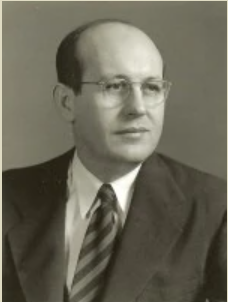
The Papers of Wayne Oates, a student at Wake Forest College in 1938-1940, are in the holdings of the Special Collections of Wake Forest University. (He left his medical papers to the University of Louisville where he also studied psychology and taught.)
Oates’ work is significant because it started a revolution in Christian thought that resulted in a 20th century surge in Christian book selling. According to the Barna Research Group, in 2003, over half of Americans were reading Christian Books, whether self-identified as Christian personally or not. Many of these best selling books were “self-help” based upon Biblical principles, a genre Oates pioneered. He also inspired thousands to follow him into the practice of Christian counseling.
Wayne Oates came from a broken family in a poor mill town in South Carolina into which he was born in 1917. His father deserted the family immediately after Wayne’s birth (and little more is known about him) and years later, in a paper on guilt, Wayne revealed that he thought his “coming into the world” was the cause of his family disruption and struggled with that as a child. His mother worked so many shifts in the mill to support the family that Oates’ older sister and grandmother raised him; he often credited all these women as the heroes of his life. Wayne himself went to work in the mill as a teenager and recounted how an encounter in the mill dorm with an older man challenged him that he should consider changing the arc of his life. He was also influenced by an opportunity to serve as a page in Congress, where he was exposed to how education can advance a person’s life. Challenged by workers in his local Baptist church to live a life of service, he started educating himself. His youth gave him an abundance of emotional and physical struggles that made him not bitter but analytical.
Wayne received his bachelor’s degree at Wake Forest College, not in theology but English. He became so well-read that almost no sermon or discourse of his does not quote the likes of Plato or Dostoevsky or Milton. But he also took homiletics courses, as revealed in some of his sermon outlines submitted for classes. Shortly after graduation he assumed the pastorate of Peachtree Baptist Church in nearby Nash County and recognized the problems with which pew occupiers struggled. His sermons and other writings reflected his growing desire to use the Biblical theology he embraced in application to human challenges.
An amazing example of Wayne Oates’ growing analytical comprehension of how to apply theological principles to human circumstances as coping methods is reflected in a sermon in the Oates holdings in the Historical Baptist Collection titled “Security in Conflict.” It is undated but timely references place its writing in the final weeks of December 1941, immediately after Pearl Harbor and American entrance into World War II. Obviously a sermon intended for people gravely concerned about jumping into the international fray, it was an immediate response to a national crisis that would also become personal for many. No doubt women who had lost a father or husband in World War I hung onto every word, perhaps sitting next to teenaged sons who would go into war in real time trauma. It was also remarkably historically insightful.
The sermon began with the compelling opening line – “The whole world is a holocaust of war.” Crisis vividly named but also an unusual, very early usage of an ancient word to describe current events. History mostly credits the first mention of the word holocaust to World War II, now synonymously connected to the Nazi slaughter of millions of Jews, to a New York Times article of May 23, 1943, fifteen months after Oates stood in a pulpit and made that statement. This connection was not commonly used until the 1960s, twenty years later. Oates no doubt knew from his vast readings the word holocaust (and its ancient meaning of a sacrifice reduced to ashes by fire) but to use it several years before knowledge of or the liberation of concentration camps made Oates particularly insightful. The world was indeed on fire and this young preacher (he was only 24 years old and his Wake Forest degree his only education at that point in his storied academic career to come) recognized World War II as a holocaust.
Oates’ sermon stated the “escapisms” most people were employing in the fear of the war, including denial, bitterness and “crude emotionalism disguised as patriotism.” Jesus, in the troubled world of the Roman Empire, was given as the model of serenity and illustrated by William Wordsworth’s poetry about the water lily that floats atop tossing waves because deeply grounded far below. Staying rooted in faith was the security to be found in conflict.
It is the language that Oates used that stands out in its sheer clarity of his grasp of the essence of this conflagration, as the Americans came to the world’s rescue. After stating that it was right to be in the war and to win it, he reminded his parishioners what “the Eternal has to say to the temporary…When the last dictator is only a nightmare of memory, men will still yearn to know God and His Righteousness.” He offered reality and hope – “In 1942, we shall face the collapse of hopes, the cruelty and stupidity of men…and the crumbling of world civilizations.” But, he concluded, “The Goodness of God will ultimately triumph.”
Recognition of fear in the congregation’s faces and profound counsel from the pulpit also indicated where life would take Wayne Oates. By the end of the World War II, he would be studying to spend his life not in pastoral ministry but finding how best to apply Biblical truth to human problems in the 20th century, a challenge he first dealt with in a small town Baptist church in eastern North Carolina.
Wayne Oates stood in that pulpit that bleak midwinter Sunday morning and preached on hard times and where hope could be found, way ahead of his time and on the brink of changing it.
5 Comments on ‘Wayne Oates, Christian Psychology and World War II’
Great reading! What an interesting piece on the history and evolution of Christian writings. I will read more about him one day soon! And cool to find out Gary Chapman’s connection to WFU.
Thank you for your wonderful piece, Marcia. I’ve said it before and will say it again, your writing is inspiring and your insight into the life of Wayne Oates is invaluable to those of us to understand him and his work. Now I’m going to read it again!
Thank you, Marcia, as always, we rely on your knowledge and expertise about Baptist history! SCA is currently collaborating with the University of Louisville to digitize the papers of Wayne Oates in both locations, in order to provide easier access to his writing and thoughts.
I’ve heard so much about Wayne Oates over the years and how important he was in counseling. Until your post, I didn’t know any details-so many thanks for this piece!
Congratulations for this insightful discussion about Wayne Oates. I will try to read more about this important Wake Forest alumnus.