
The day after Commencement, and as the university shared the news that Peter Rodriguez will be our fifteenth president, I was in Miami to represent ZSR and Wake Forest at the Association of Southeastern Research Libraries Annual Meeting and Spring Membership Meeting. This was my second ASERL gathering. I have been so impressed at how welcoming the group has been from John Burger’s site visit when I started, to a New Deans discussion group, to a mentor who is assigned to each new member, to a friendly meeting designed to create opportunities to connect with people doing similar work across institutions.
This was the 70th anniversary of ASERL (Wake Forest College joined it in 1966). Since joining, ZSR has been well represented in the association. Most recently Tim Pyatt was recognized with ASERL’s second ever Outstanding Leadership Award after serving in all three positions: Member-At-Large, Secretary/Treasurer, and President. Lynn Sutton served as president as well.
As part of the program, we participated in a professional development session in which we sorted ourselves by the DiSC assessment we did together as a group. It was interesting doing this following our Change Style Indicator-2 assessment in our own professional development day. I never feel these types of assessments perfectly capture everything, but they’re interesting lenses through which to consider different issues. The value of doing this alongside peer deans was less about the typology and more about the conversation it started as we moved about the room. As we moved from quadrant to quadrant it was interesting to chat with library leaders from across the region about how we each take in information, make decisions, and respond under pressure. As so often is the case, it emphasized for me that the work of leading a library is deeply relational, and that the people doing this work elsewhere in the region are wrestling with versions of the questions we are considering at ZSR albeit with different institutional cultures and priorities and from positions of different styles and approaches.
The other thread to surface from the meeting (as it does everywhere these days) was a series of lightning talks on AI. We learned about another library network’s symposium, about coming together to think about materials being used in genAI training, the technical implementation of AI tools to support library work, and a series of cohesive programs to support students and faculty navigating AI across the institution. I shared some of what we have been doing at ZSR through the AI Engagement Task Force, including the values statement and engagement framework, and our work was well received. The culture and change work that was central to our approach thus far led to some good follow-on conversations with others navigating these changes, too.
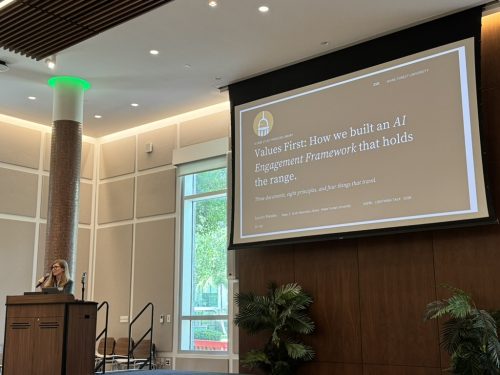
I left the meeting reflecting on a few themes: ZSR is doing distinctive work that is useful for other research institutions in our region, and we are part of a network of peers whose thinking can extend and deepen ours if we stay in genuine relationship with them. Our values work is different from institutions piloting significant workflow changes utilizing AI, but an awareness of the breadth of approaches institutions are taking makes for a fuller picture of what is possible. All of this matters as we keep building our foundation for what comes next.
My thanks to everyone here who is doing the work that made the trip worth taking, from the AI Engagement Task Force members to everyone keeping things running smoothly over the past week!
1 Comment on ‘Notes from ASERL’
ASERL gets it right in welcoming new Deans and creating community– a testament to their small (but mighty) staff and the network of volunteers across the organization. Thanks for representing us well and sharing ZSR’s work on building the AI Engagement Framework!