This year was NASIG’s year for an in-person conference after going to an in-person/online-only model a few years ago. The 2026 conference was held in Madison, Wisconsin, on the campus of the University of Wisconsin, a return of sorts to the early days of the organization when college campuses hosted the conference, from meeting spaces down to bunking in dormitories. While we met at the university, conference attendees stayed at nearby hotels.
The Vision Sessions that opened and closed the conference were unique and thought-provoking as always, and the speakers had plenty of things to consider about where the profession may be heading. In her talk “What Librarians Know,” Raina Bloom of the University of Wisconsin-Madison Libraries outlined the continuing challenges that library workers understand very well in the contemporary landscape. Even though the profession is one of the most trusted and perceived as honest in the broader culture, library employees work to connect their users to the information they need and must act when that trust is breached. She gave an example of a user who discovered an AI-generated article in what was determined to be a “predatory” journal that was a source of poor information. The library took steps to report that article and get it removed from the discovery later, but they hoped that their relationship with that patron wasn’t jeopardized by that incident. Mondo Vaden (he/they) described their story as a Black, Queer, and Deaf librarian and the values they learned in “Information and Intersectionality in the Digital Millennium: Remix.” They talked about how the early twenty-first century has given marginalized communities an opportunity to distribute their information without going through a traditional outlet or institution. The variety of paths that lead to information have given access to documents, such as zines, which have been inaccessible to a wider audience, leading to a greater sense of the rights of everyone to safety and personal security.
Other highlights included:
Living with static budgets. Several presentations discussed the real situation facing some libraries: how to provide materials with budgets that aren’t growing proportionately with rising costs. Librarians are faced with choices with regard to continuing resources, and the potential cuts that are made are managed uniquely by the respective institution and its stakeholders. This is not a new issue, but as many libraries are facing a plateau with available funds, these choices will continue and workflows to accommodate them will continue to be modified.
AI, for better or worse. Our library may be on the leading edge of how to incorporate AI into library workflows and procedures- whether predictive or generative- and other libraries are facing similar questions. There are opinions that fall on all sides of this technology, but the questions continue to be asked. In one presentation, one use that was explored was cleaning up the metadata that has plagued legacy records through a variety of library systems. Another presentation detailed its use in creating subject headings for specific collections that have been backlogged due to the number of staff available to manage them effectively. Both presentations, however, stressed the need for oversight by human operators to ensure that the technology is used effectively and with best practices in place.
The practice of “slow librarianship.” This was my first exposure to the concept, and it’s an intriguing one. Slow librarianship emphasizes the relationships between library employees and the communities they serve, while building a supportive, comprehensive approach that encourages all around well-being. It was identified in 2017 and has continued to spread in the library community, where quality and carefulness are highlighted in a more relational and deliberative manner. I found this presentation especially interesting as it was given by a librarian from Western Carolina University; this was her first NASIG conference, and she said that she would be back!
This was also a bittersweet conference for me as it was my last conference as a member of the Executive Board.
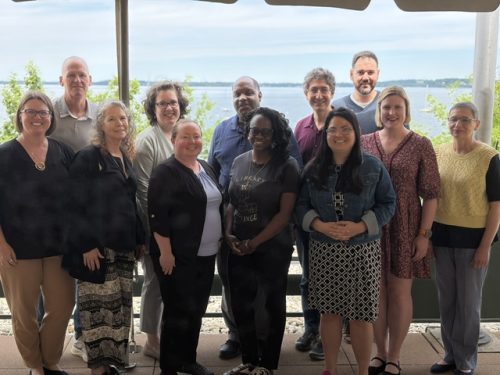
I was elected to serve as a member-at-large in 2023 and participated in meetings that helped to shape the organization to its present status. I was also a liaison with the Conference Planning and Equity & Inclusion Committees, helping them to fulfil their respective goals with the organization and its workings. But I will miss the people I worked with the most, as NASIG has been a wonderful place to collaborate with individuals from across the library community who bring their personal skills to building a vibrant organization.
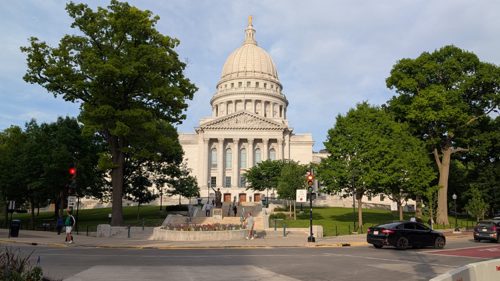
On another personal note, this trip was my third visit to a state capitol building since attending the annual conference, starting with Denver in 2006, followed by Indianapolis in 2017. I took a side quest to go to the Wisconsin State Capitol building, and it was a great experience. More photos from the trip are also available for viewing.
4 Comments on ‘NASIG 2026 According to Chris’
Sounds like a great conference, Chris! Thank you for sharing.
Thanks for the great recap! And congratulations on a successful term helping NASIG continue to grow and evolve over the years.
Thanks for your service on NASIG’s Board!
Great conference write-up, Chris! Thank you for representing ZSR so well in service to NASIG!